Build · AI-native products and customer experience
Customers now expect products that understand them, anticipate what they need and remove the friction. AI is reshaping how people discover, interact with and experience digital products.
We combine human-centred design, AI-native product thinking and engineering to rethink customer journeys, create more intuitive and adaptive experiences, and unlock new opportunities for customer and business value.





THE PROBLEM
Product teams rarely lack ideas. They lack the evidence to choose between them, and the pace to find out. These are the symptoms.
Customers drop out at the same three points every month. Everyone knows where. Nobody has been able to fix it, because the journey crosses four teams and two legacy systems.
The last real customer research was years ago. Roadmap debates are settled by seniority, and the product ships features customers did not ask for.
The team learned too late what worked, so the investment went into a feature that tested well in the boardroom and badly in the market.
A chatbot in the corner of a product that was not designed for it. Customers ignore it, and the AI strategy is judged by the thing nobody uses.
THE PROCESS
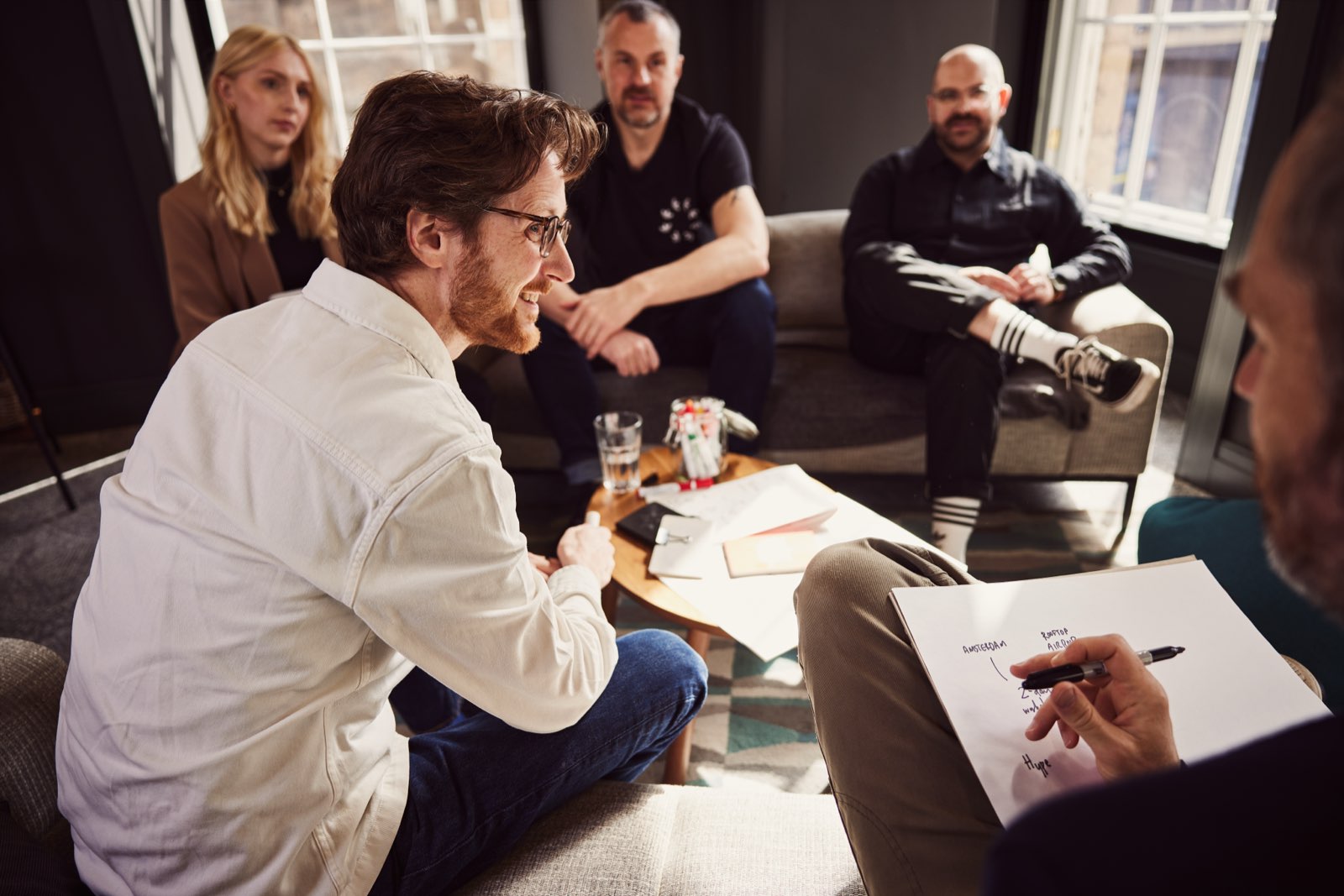
Product engagements run from eight weeks for a journey redesign to six months for a new product. Whatever the size, customers are in the room from the first week.
Map
AI-accelerated research, analytics and journey mapping show where customers — and increasingly their AI agents — struggle, and why. An experience and accessibility baseline sets what we measure against.
You hold: An evidenced view of where customers struggle, what they value, and where AI would help rather than get in the way.
Design
Personas, journeys and propositions shaped in hands-on workshops with your teams. We design AI into the journey where it serves the customer — personalisation, anticipation, removing friction — and leave it out where it does not. We move from fixed journeys towards contextual interactions that can respond and act within defined boundaries, with design systems that keep the result consistent and fast to build.
You hold: A validated journey and product design, with the hypotheses to test explicitly stated.
Build
Rapid AI-driven prototyping and usability testing with both human and synthetic users in structured sprints, so unproven ideas are killed cheaply and proven ones are built properly. Engineering runs AI-native from the start, with the agentic software delivery lifecycle behind it, so the product goes live with the quality and observability to stay live.
You hold: A product in customers' hands, with the numbers to show it.
Run
Analytics and performance tracking in place. Your product and design teams own the design system, the research cadence and the experimentation rhythm, so the next improvement does not need us.
You hold: A product that keeps getting better, and a team that knows how to keep it growing.
THE OUTCOME
What good looks like:
PARTNERS AND ECOSYSTEM
Our product and design teams work in Figma, with design systems that carry straight into engineering. Our AI partnerships with Anthropic and OpenAI mean the AI inside the product is built by practitioners on the models it will actually run on.
On the engineering side, AWS, Azure and Google Cloud at depth, so the product scales when it succeeds.

Preferred Services Partner.
The AI inside a customer-facing product is built on the models our practitioners use daily, rather than chosen from a datasheet.
Select Partner.
More than 750 certifications across our people, so the model behind a feature is chosen for the job it has to do in the journey.

Where the design system lives.
Design systems that carry straight into engineering, which is what keeps a redesigned journey consistent and fast to build rather than a set of screens to interpret.
Alongside them we build in React and React Native.
BUILT IN-HOUSE, PROVEN ON CLIENT WORK
Evaluation you can trust
Our evaluation harness tests AI systems against real-world cases before and after they go live, so quality is measured, not hoped for.
For this work: Any AI feature in a customer-facing product is evaluated against real customer cases before launch and monitored after. One bad answer in public can undo years of brand trust; Raidar is how we stop that happening.
Tests the proposition early
AI-powered customer representations generated from your redacted customer data, enabling us to explore emerging needs, challenge assumptions and rapidly test proposition hypotheses before validating the strongest opportunities with real customers.
LIVE IN BUSINESSES LIKE YOURS
 FanDuel
A one-screen self-service reactivation flow: 33,000 customers back in 60 days, 86% of them self-serving, and £5m in revenue unlocked in the first few weeks.
Read the case study
 OAG
An Ask Analyzer feature letting customers question aviation data in plain English, with prototypes down from 5 days to 1 and delivery time halved.
Read the case study
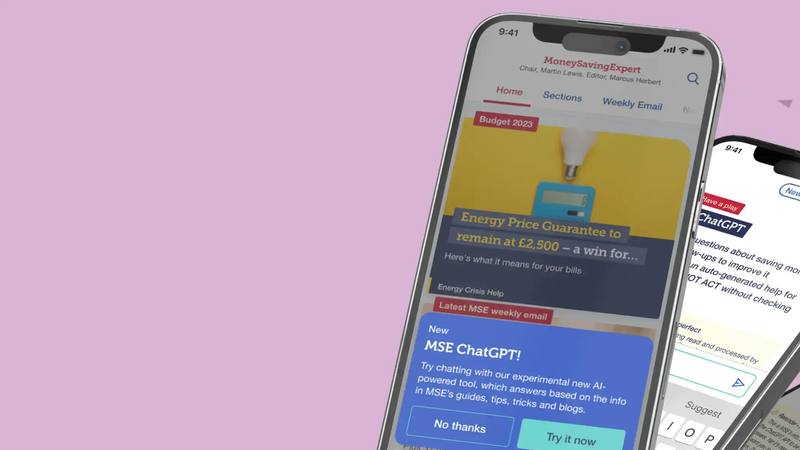 MoneySavingExpert
A personalised app used by over 400,000 people a month, four times more engaged than the website, plus a GenAI chatbot with over 340,000 conversations.
Read the case study
THE FIRST STEP
A two-to-three-week Map gives you customer research, a journey map with the drop-off points evidenced, and an experience and accessibility baseline. It usually changes which feature goes first.
