Think · AI strategy and value roadmap
AI spend is rising across licences, pilots and vendor tools, and nobody can say which bets will return. We give you a short list of costed use cases tied to the P&L, a roadmap in the right order, and a first slice live within weeks to prove the numbers are real.
Not a 100-page strategy deck. A plan the board can fund.






THE PROBLEM
Most organisations we meet are not short of AI activity. They are short of a defensible view of which activity matters. If any of these sound familiar, this is the page for you.
Licences, pilots and vendor tools have crept across the business. Each one made sense on its own. Added together, nobody can show the board a return.
The demo worked. Then it met real data, real security review and a real owner, and quietly stopped. The organisation now has a graveyard of promising pilots and a healthy scepticism about the next one.
IT owns the platform, data owns the pipelines, the business owns the problem, and nobody owns the outcome. Decisions wait on committees that were never designed to make them.
Not a vision statement. A sequenced list of what to do, what it costs, what it returns and when, with someone accountable for each line.
THE PROCESS
A typical engagement runs eight to twelve weeks. The first step is deliberately small and bounded, so you can start without committing to the rest.
Map
Structured discovery across business units: operational workflows, customer pain points and your current AI and software spend. We use value stream mapping and jobs-to-be-done to isolate root causes rather than symptoms, and our Compass accelerator to pull in what the technology estate can actually support.
You hold: A long list of candidate use cases, a spend baseline and an honest readiness picture.
Design
Every candidate is scored on the same weighted criteria: financial impact, operational scale and frequency, data readiness, regulatory and privacy risk, and time to evidence. We pick two or three to test, and agree what “proven” means for each before anyone builds anything.
You hold: A prioritised shortlist and a defined experiment for each.
Build
Time-boxed experiments, each designed as a minimum viable test of a specific feasibility, usability or accuracy question. One slice goes live, with real users and real data, so the value case has evidence rather than estimates behind it.
You hold: A working thin slice, measured results and the surprises you would rather find now than after funding.
Run
Evidence becomes a business case: total cost of ownership, OKRs, go or no-go criteria for each use case, and the roadmap sequence. Ownership and governance are agreed, and the Intelligence Engine keeps every decision and finding available for the delivery that follows.
You hold: A funded roadmap, named owners and the context to start building the following week.
THE OUTCOME
The output of this work is a decision, not a document. You finish with:

PARTNERS AND ECOSYSTEM
We are one of six Anthropic Preferred Services Partners in Europe and an OpenAI Select Partner, with more than 100 Anthropic-certified practitioners and 750+ OpenAI certifications across our people. We hold AWS Generative AI competency and work across Azure, Google Cloud and the wider data ecosystem.
None of them pays us to recommend them. That is the point: when we say a use case belongs on one model or platform over another, it is because the evidence says so, not because the contract does.

Preferred Services Partner.
One of six in Europe. Claude and Claude Code sit at the heart of how our teams build, and the strategy work uses the same models your roadmap will run on.
Select Partner.
More than 750 OpenAI certifications across our people, so the experiments in the Build step are built by practitioners rather than read about by them.
Advanced Tier Services Partner.
AWS co-invests in client engagements, which often means the first thin slice is part-funded before your own budget is touched.
Alongside them, we work across Microsoft Azure, Google Cloud, Snowflake, Databricks and the wider data and cloud ecosystem.
BUILT IN-HOUSE, PROVEN ON CLIENT WORK
Context that compounds
A persistent, queryable knowledge layer that brings together business strategy, discovery findings and delivery insights, keeping organisational context available as the programme evolves.
For this work: It keeps discovery knowledge out of a slide deck and makes it a way of working. Every interview, workflow map, scoring decision and experiment result is captured from week one, so the teams who build the roadmap start with the full context rather than a summary of it.
Relationships, not records.
A queryable knowledge graph and AI reasoning layer that connects estate data, dependencies and business constraints to inform modernisation, migration and investment decisions.
For this work: Used in the Map step to test each use case against what your estate can actually carry, so “data readiness” on the scoring matrix is a measurement rather than a guess.
LIVE IN BUSINESSES LIKE YOURS
 evoke
£30M in operational cost savings and 18 AI solutions in production.
Read the case study
 OAG
Product-led value streams and a 50% faster time to value.
Read the case study
 Department for Business and Trade, with LGSCO
Six weeks from discovery to a working Intelligent Search proof of concept.
Read the case study
CreateFuture in a short space of time has already delivered a multiple return on our investment.

James Conway
Director of Technology, tombola
STILL HUMAN
Lindsay Ratcliffe
Chief Innovation and Transformation Officer
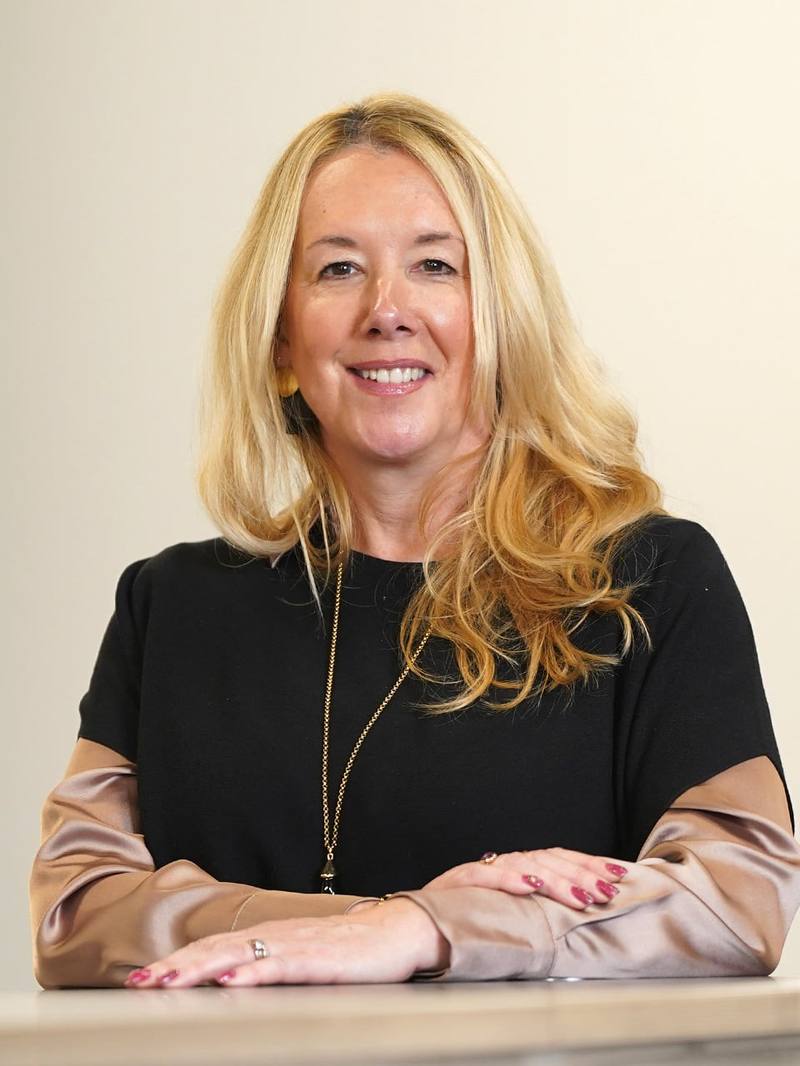
Leads CF/Beyond and the Think practice, and designed the transformation CreateFuture ran on itself from 2024.

Martin Paton
Chief Technology Officer
Owns the engineering view of what is feasible, and the Atlas, Compass and Fleet accelerators.

Darren Dalrymple
Industry Director
Brings the P&L lens to every use case, and has run the value cases behind our largest gaming engagements.
THE FIRST STEP
A three-week Map engagement gives you a long list of use cases, a spend baseline and an honest readiness picture, whether or not you work with us afterwards. If the picture says you are not ready, we will tell you that too. It is a cheaper conversation to have now than after the budget is committed.
