Build · Agentic operations automation
Context switching between a dozen systems to answer a single query. Faults found only when customers call. Skilled people spending their days on manual work that a machine should do.
We put agents into the operation so they handle the routine work, prepare the context for your people, and spot problems before customers do. Revenue grows without headcount growing in step.



THE PROBLEM
Operations leaders usually know exactly where the waste is. What they lack is a safe way to remove it without breaking the service. These are the patterns.
A customer or case question needs the CRM, the billing system, the document store, two spreadsheets and someone's memory. The answer takes twenty minutes and is right most of the time.
The first sign of a problem is a complaint. By then it has affected hundreds of people, and the team is firefighting rather than fixing.
Case workers drafting the same letter, advisers re-keying the same data, analysts copying between systems. Expensive people, cheap work, and attrition rising because of it.
Every 10% more volume needs 10% more people. The business cannot grow its way to better margins, because the operating model does not scale.
THE PROCESS
Operations automation moves fast: first agents in production inside eight to twelve weeks is normal. The discipline is in the first step, where we remove waste before we automate it.
Map
Process improvement first. We lean-map the operational workflows end to end, measure where the time and the errors go, and remove the steps that should not exist before any agent touches them. Enaible profiles the tools people actually use, so the automation lands in the flow of work rather than beside it.
You hold: A prioritised list of processes, the measured cost of each, and a cleaner process to automate.
Design
A hybrid architecture: retrieval-augmented generation over your structured and unstructured stores, event-driven integration with the systems of record, and a secure execution layer for actions. Confidence scoring routes anything low-confidence or high-risk to a human before it executes. We agree the metrics — time saved, error rate, customer impact — with you up front.
You hold: An agent design with human-in-the-loop routing, and a benefits case you will measure against.
Build
Agents are built and put into production on the first two or three processes, with Enaible embedding them into the tools and workflows your people already use. Raidar evaluates outputs against real cases before launch and keeps evaluating after. Real-time dashboards track time saved, errors and customer impact from day one.
You hold: Agents live in the operation, with measured benefits and a visible safety net.
Run
Your operations and technology teams own the agents, the routing rules and the dashboards. The next processes on the list are picked up by your people with our support, until the backlog is theirs.
You hold: An operation that scales without matching headcount, run by your own teams.
THE OUTCOME
What good looks like:

PARTNERS AND ECOSYSTEM
We are an Anthropic Preferred Services Partner and an OpenAI Select Partner, with Azure OpenAI and AWS Bedrock delivery at depth. Agents are built on the model that best fits the task and the data residency your sector demands.
Where the operation runs on Microsoft 365, Salesforce or a case management system, Enaible puts the agents inside those tools rather than in a new one.

Preferred Services Partner.
One of six in Europe. Where the work is drafting, summarising or reasoning over case material, this is usually the model the agents run on.
Select Partner.
Azure OpenAI in particular, where data residency rules decide the platform before the model does — which in regulated operations is most of the time.
Where the work already happens.
Enaible puts the agents inside the tools your people already have open, which is the difference between automation that sticks and another system to route around.
Alongside them we build on Azure OpenAI and AWS Bedrock.
BUILT IN-HOUSE, PROVEN ON CLIENT WORK
Puts AI in the work
A workflow layer that puts AI into the processes people already use, so adoption sticks beyond the first month.
For this work: Enaible is what makes operations automation stick. The agents work inside the tools people already use, so there is no new system to learn and nothing to route around.
Evaluation you can trust
Our evaluation harness tests AI systems against real-world cases before and after they go live, so quality is measured, not hoped for.
For this work: Raidar tests every agent against real cases from your operation before it goes live, and keeps testing after, so the safety net is measured rather than assumed.
LIVE IN BUSINESSES LIKE YOURS
 Zuto
A 45% reduction in operational admin for advisers, and a 30% reduction in errors.
Read the case study
 Dechert
A retrieval-augmented AI layer parsing natural-language legal queries, cutting regulatory lookups from hours to minutes.
Read the case study
 MoneySavingExpert
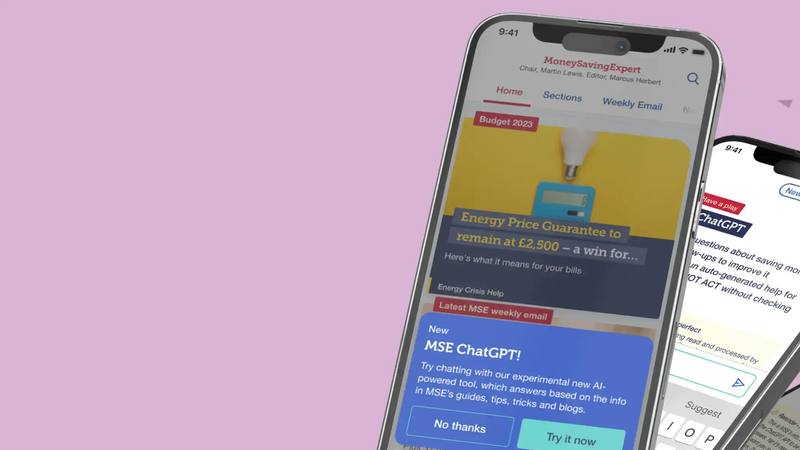
Open Banking agents that scan transactions and recommend the best time to switch, instead of users tracking bills by hand.
Read the case study
With CreateFuture you get a team that are unafraid to get their hands dirty.
Andy Dunbar
Head of Product and CX, Aberdeen
THE FIRST STEP
A two-to-three-week Map gives you a lean view of your highest-cost processes, the measured cost of each, and a benefits case for the first two agents. You pick the process; we show you the number before anything is built.
