
Prediction markets are a federally regulated financial market built around live event outcomes. Different from a traditional sportsbook, it makes them one of the few genuinely new product types to emerge in gambling and gaming in years. They are also one of the fastest-growing new categories in US sport.
Prices on an exchange are set by the market rather than the operator, meaning you can't compete on odds. However, the operators who move first shape how customers trade.
Fanatics knew what they wanted and when they wanted it. A live, regulated prediction market in customers' hands for the NFL opener. To get there, they chose CreateFuture. The team and the build was worked out together, with CreateFuture Inputting on and driving the technical direction. The job was done in just twelve weeks.
to a production-ready platform
growth in monthly trading volume since launch
from 878 customer ratings, with 90% of referred customers going on to trade repeatedly
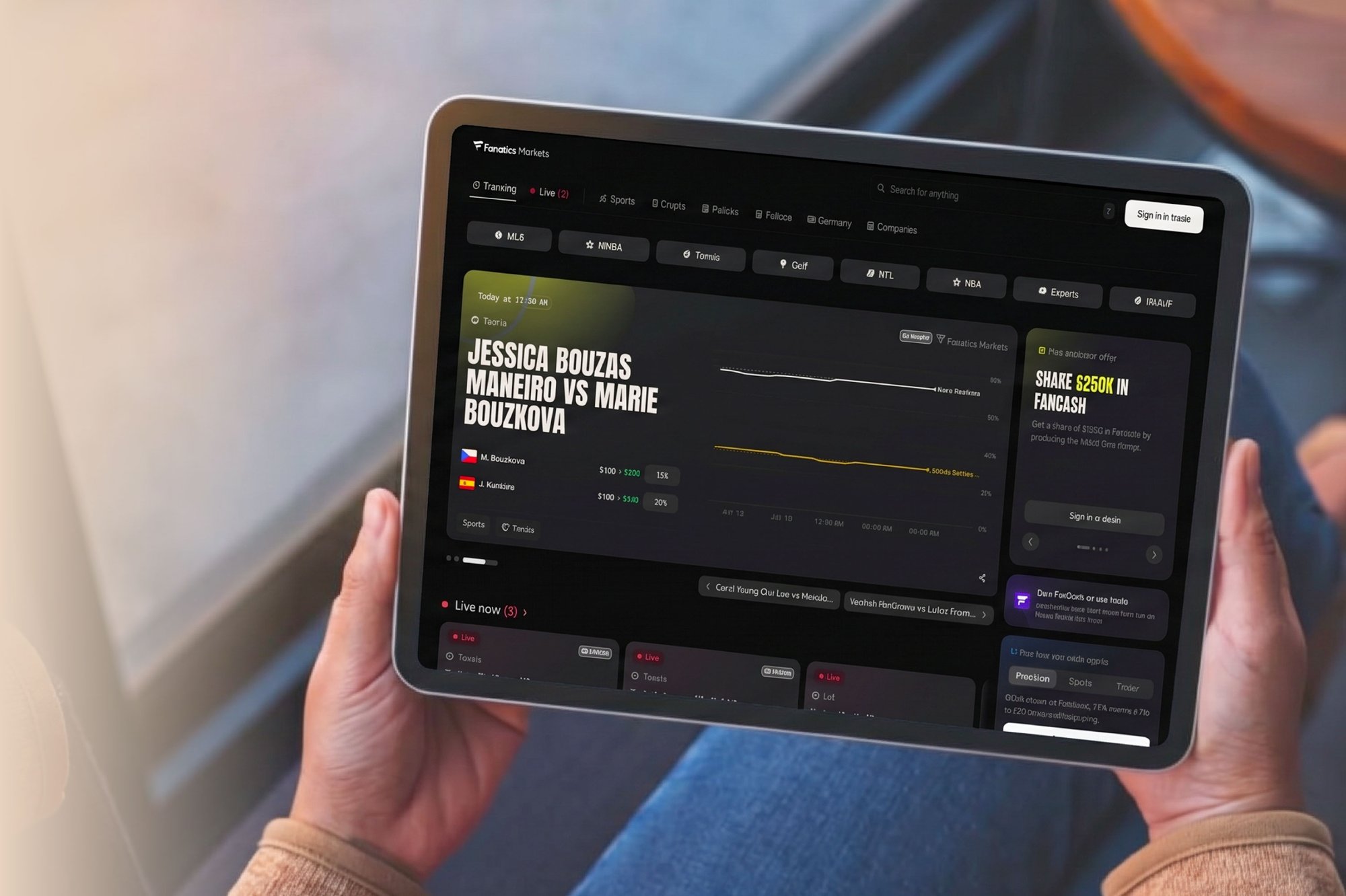
Fanatics Markets lets customers trade on the outcomes of live sporting events, from the NFL to tennis, on a platform regulated as a financial market rather than licensed as a sportsbook. It sits inside Fanatics Betting and Gaming, one of the fastest-growing sports betting and gaming operators in North America since its 2023 launch, and part of Fanatics Inc's wider ecosystem of more than 100 million sports fans.
Fanatics Betting and Gaming, launched in 2023, is one of the fastest-growing sports betting and gaming operators in North America, part of Fanatics Inc's wider ecosystem of more than 100 million sports fans. Through 2025, prediction markets became the most contested new category in US sport, and Fanatics wanted in early, targeting the NFL season opener in mid-September.
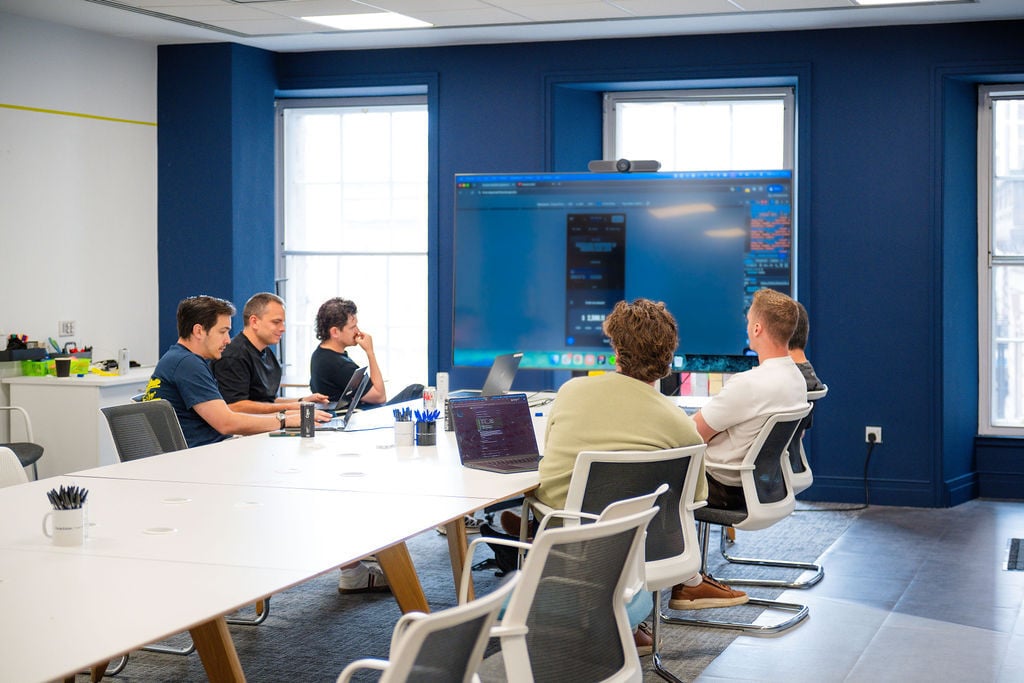
There was no engineering team to redirect and no time to recruit one. Fanatics had senior leadership and a product owner in place for the new business, but the people who would actually build it didn't exist yet.
The category was new to Fanatics on two fronts. Legally, a prediction market is a federally regulated derivatives product overseen by the Commodity Futures Trading Commission, not sports betting licensed state by state. That meant the product had to sit on a regulated third-party exchange rather than one built from scratch. Commercially, it's an exchange, not a sportsbook: customers trade with each other instead of against the house. Fanatics had never built that before, and it wasn't something an existing system could be adapted into.
CreateFuture had engineers shipping production code within a week of starting, working alongside Fanatics' own team from day one.
The teams were working across timezones, and Fanatics trusted CreateFuture to input, extend, build and own the architecture and make the big calls independently when required. This trust would prove to be a key factor in the efficiency and speed of the entire project.
Senior team members from CreateFuture provided reassurance that the right actions were taken early on in the build.
Wallet, payment and verification already existed and were reused rather than rebuilt after CreateFuture built numerous integrations. That meant every hour of new effort could go toward what didn't: the market catalogue, the order lifecycle and the customer app. As these were built in-house rather than bought in, Fanatics owns the roadmap for all of it.
The platform's services are Kotlin and Java, event-driven over Apache Kafka, running on Kubernetes on Amazon EKS, with a single Compose Multiplatform codebase shipping both iOS and Android from one team.
It held to its twelve-week deadline even after the underlying regulated exchange had to be swapped late on. One of the biggest decisions made by CreateFuture was to isolate the integration behind the platform's own interfaces. That meant the team absorbed the change in days rather than rebuilding the platform around it. Designed for event-day spikes from the outset, the platform has since handled more than 50,000 concurrent connections at 99.99% uptime.
to a production-ready platform
growth in monthly trading volume since launch
from 878 customer ratings, with 90% of referred customers going on to trade repeatedly
Engineers used GitHub Copilot and Claude to draft code faster, but every change still went through pull request review and testing with the CreateFuture team. A Fanatics-specific ticket-writing tool sharpened requirements as they formed week by week, and AI drafted the delivery documentation and reporting that the wider programme now runs on.
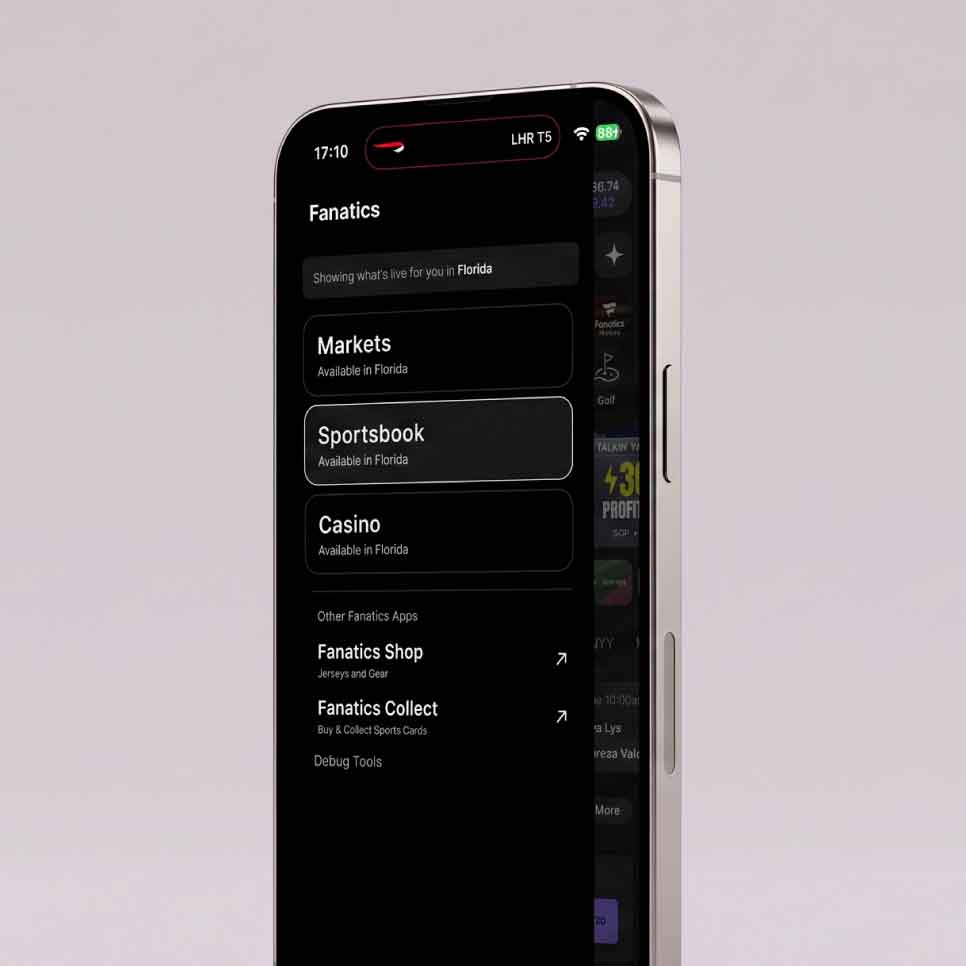
Fanatics Markets is a mobile trading app backed by a set of new services sitting between Fanatics' existing group platform and the regulated exchange that supplies tradable markets and prices.
Another big call by the CreateFuture teams was the market catalogue that maps supplier markets into Fanatics' own systems, enriched with live event data and published under content-managed control. The order engine covers the full lifecycle: placement, validation, execution, cancellation, settlement, reconciliation and history. Explicit designs were made for duplicate orders, race conditions, stale prices and rejections because each one is visible to a customer as money behaving unexpectedly.
A portfolio layer ties account data to orders, positions and settlement into one accurate view, and operator tooling keeps day-to-day market management inside Fanatics' own team rather than dependent on engineering. Single sign-on and FanCash rewards carry across from the rest of the group, so an existing Fanatics customer arrives already recognised.
Fanatics Markets is live, regulated, and growing. Because Fanatics owns the platform rather than licensing it, the roadmap moves at the pace the business wants. That means a new app version every week, more than twenty features shipped since launch, and a web channel added on top of the mobile product without a vendor negotiation. When the underlying regulated exchange had to be replaced, that was a change Fanatics could make rather than one it had to ask for.
Thomas Morley-Johnson
Head of Technology - iGaming, CreateFuture
Boosting reliability and audit-readiness for America's #1 gaming operator through a modernisation-led AWS migration.
Bringing machine learning and generative AI onto one foundation, so evoke can grow from three live use cases to hundreds more.

Modernising Podium's 20-year-old sports data platform through AI-native delivery, in a third of the time and at half the cost.